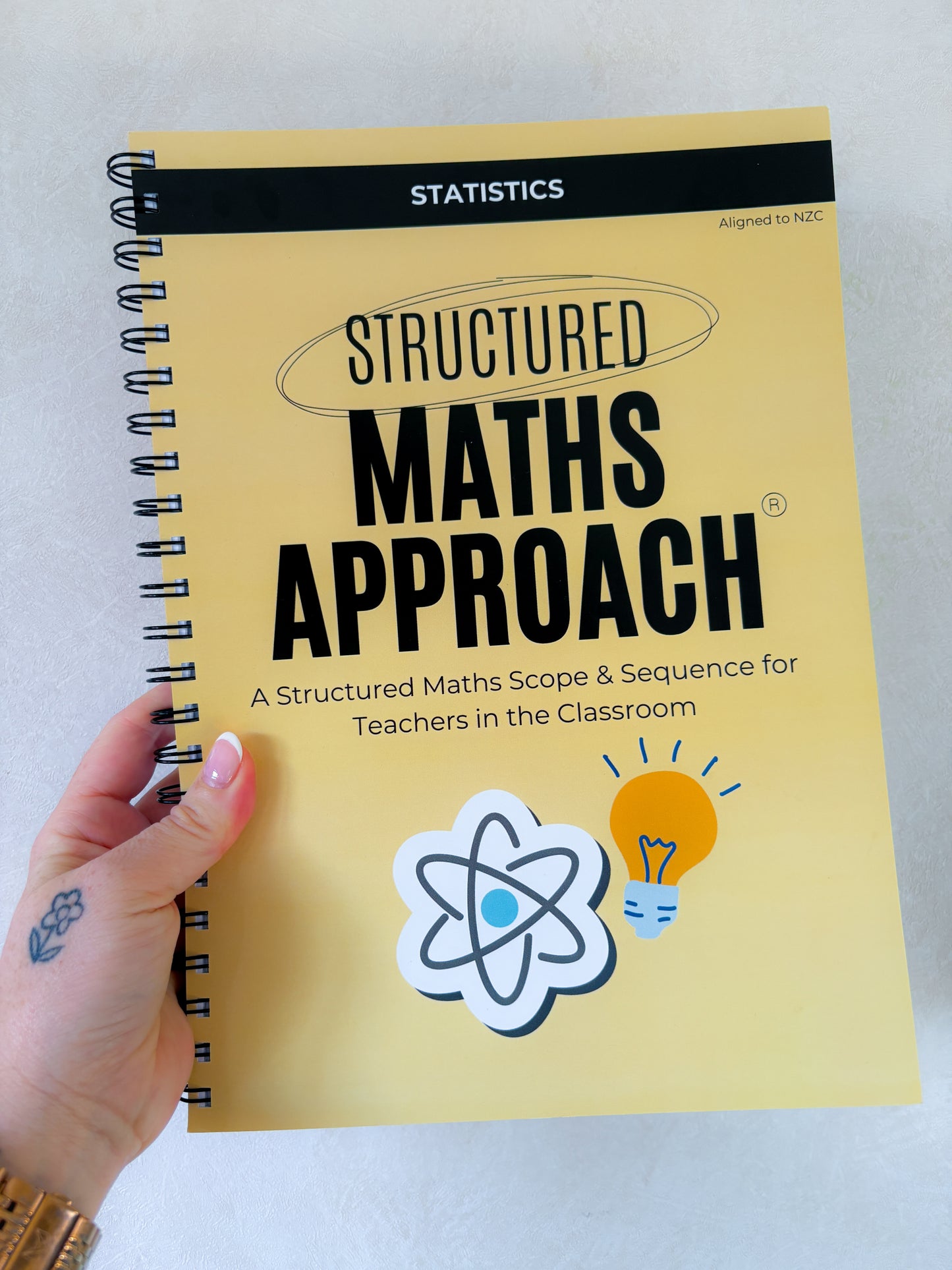
Structured Maths Approach Statistics *NZC - Mathematics and Statistics
Structured Maths Approach Statistics *NZC - Mathematics and Statistics
Regular price
$95.00 NZD
Regular price
Sale price
$95.00 NZD
Unit price
per
Couldn't load pickup availability
Structured Maths Approach Statistics
NZC Mathematics and Statistics Aligned (October, 2025 update).
Structured Maths Approach Statistics is the next instalment for the Structured Maths Journey bringing a clear and easy to follow scope and sequence within strand. Covering Year 0-8 learning outcomes from the curriculum, this resource provides you with differentiated learning, resources and teaching materials to support all your students. Lesson and learning builds on each other with a natural progression throughout concepts.
This resource gives you access to learning outcomes for all of Year 0-8 for the strand area Statistics and elements developing knowledge from data, visualisation of data and interpretation of data.
Lessons for each year group for Statistics
During the first year (Year 1):
Lesson 1: Questions and predictions
Lesson 2: Plan and collect data
Lesson 3: Data statements
Statistical Investigation: What is the most popular fruit (or colour, pet or toy) in our class?
During the second year (Year 2):
Lesson 4: Planning and collecting data
Lesson 5: Data statements
Statistical investigation: What is the most common favourite fruit in our class?
Statistical investigation: What is the most popular playground activity in our class?
During the third year (Year 3):
Lesson 6: Planning and collecting data
Lesson 7: Findings and data
Statistical investigation: What is the most popular emoji in our class?
Statistical investigation: What is the most popular song to sing at school assembly?
During Year 4 (Year 4):
Lesson 8: Variables in data
Lesson 9: Planning and collecting data
Lesson 10: Data visualisation
Lesson 11: Findings and data
Statistical investigation: If students could have one superpower what would it be?
Statistical investigation: How far can students jump from a standing position?
During Year 5 (Year 5):
Lesson 12: Bivariate data
Lesson 13: Planning and collecting data
Lesson 14: Interpret data visualisations
Lesson 15: Findings and data
Statistical investigation: Do I drink enough water throughout the day?
Statistical investigation: Where is the best place to play?
During Year 6 (Year 6):
Lesson 16: Time series
Lesson 17: Planning and collecting data
Lesson 18: Interpret data visualisations
Lesson 19: Trends, findings and data
Statistical investigation: How does my pulse rate change with exercise?
Statistical investigation: How does the mass of a wet sponge change as it dries out?
During Year 7 (Year 7):
Lesson 20: Statistical questions
Lesson 21: Planning, collecting data and data visualisations
Lesson 22: Share and evaluate trends and findings
Statistical investigation: What are student’s favourite after-school activities?
Statistical investigation: What snack should the school tuckshop add next?
During Year 8 (Year 8):
Lesson 23: Planning, collecting data and data visualisations
Lesson 24: Share and evaluate trends and findings
Statistical investigation: Where would we feel right at home in the weather?
Statistical investigation: What is my social media data story?
This includes both a physical form of the book and a digital copy.
The digital copy will be sent to you to the provided email address once the physical book is shipped.
Included in Structured Maths Approach:
•Structured Maths Approach Statistics bound book (physical and digital copy)
•Lesson plans for each lesson
•Slide show presentations to support some of the target learning
•Lesson checks – worksheets that can be used as follow ups, check ins or confirmation of the learning
• Lesson planner with drop down learning targets included
*This resource is not included in tribe memberships or discount codes.
**This reflects the new new curriculum released October 2025 for New Zealand context.